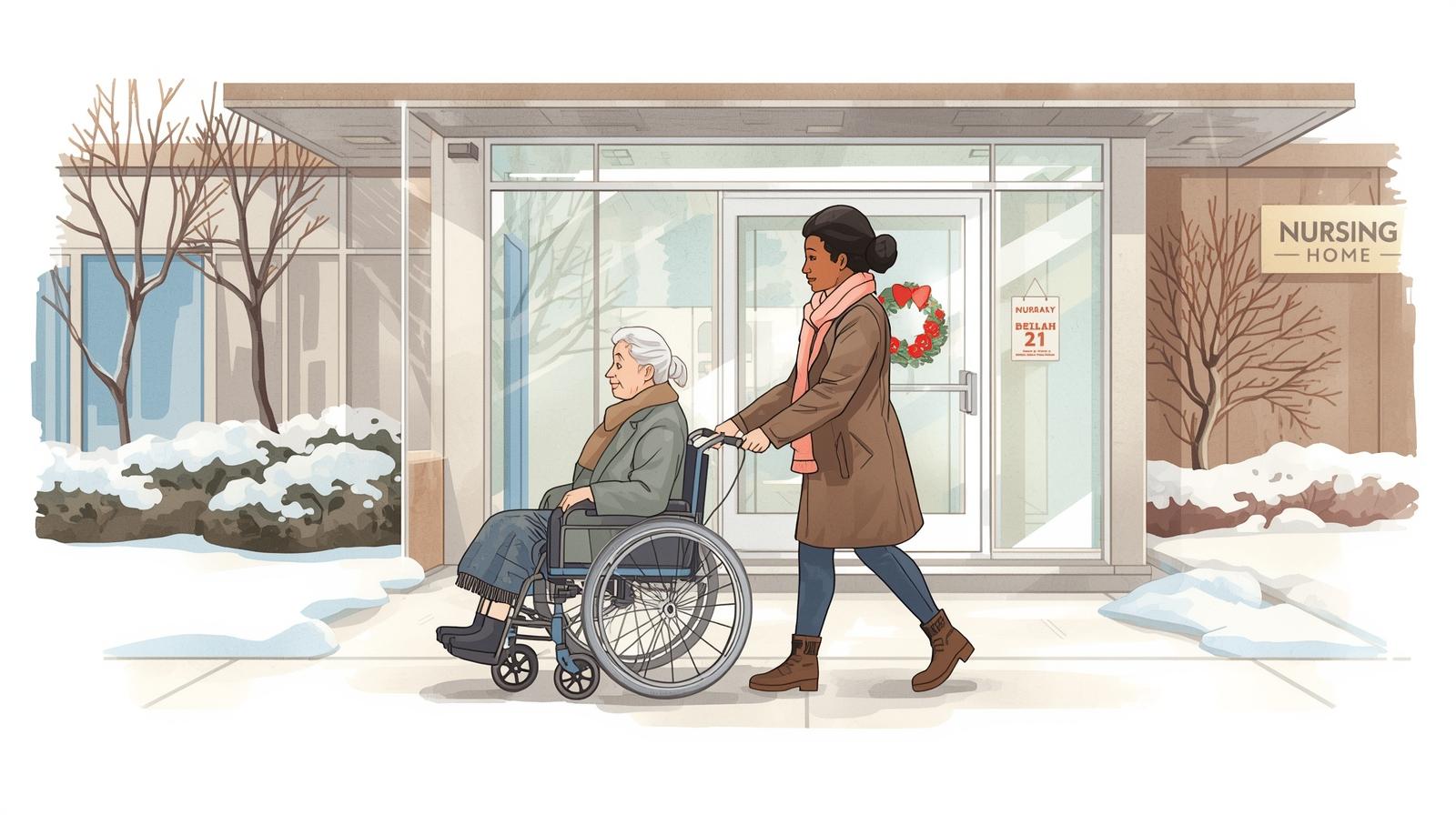
You watch your mother struggle to get out of a chair. Your father forgets the same story he told you yesterday. The doctor uses phrases like “declining mobility” and “progressive cognitive changes.” And somewhere in your gut, you know the conversation you’ve been avoiding is becoming urgent.
The question isn’t if your parent will need more care. The question is whether you’ll be prepared when that moment arrives, or whether you’ll be making desperate decisions in a hospital corridor at midnight while a social worker pressures you to accept whatever nursing home has an available bed.
Most families don’t ask the critical nursing home planning questions until there’s a crisis. A fall. A stroke. A sudden decline that transforms a parent from independent to needing 24-hour care in a matter of days. By then, the options for protecting your parent’s wishes, preserving their assets, and ensuring quality care have vanished.
You’re left scrambling to understand systems you’ve never encountered, making irreversible decisions with incomplete information, and watching helplessly as the family home and life savings disappear to pay for care.
Here’s what makes these conversations so difficult: they force everyone to confront mortality, dependency, and the role reversal where children become decision-makers for their parents. The discomfort is real. But the cost of avoiding these nursing home planning questions is far higher.
Without clear answers about legal authority, financial protection, care preferences, family coordination, and asset preservation, you’re gambling with your parent’s dignity and your family’s financial security.
This article provides five specific nursing home planning questions you need to ask your parents today, while they’re still healthy enough to answer clearly and make informed decisions. These aren’t generic questions about whether they’ve “thought about the future.”
These are targeted questions that reveal gaps in planning, uncover hidden vulnerabilities, and create action steps that actually protect your family. The answers will determine whether your parent receives the care they want in the setting they prefer, or whether crisis and chaos make those decisions for you.
Question 1 – Who Will Make Decisions If You Can’t?
Why Powers of Attorney Matter More Than You Think
The first and most critical of all nursing home planning questions addresses legal authority: who will make decisions if your parent becomes unable to make them independently? Powers of attorney come in two essential types: financial and healthcare.
A financial power of attorney grants authority to manage bank accounts, pay bills, and handle property. A healthcare power of attorney grants authority to make medical decisions including treatment choices and facility placements.
The critical detail most families miss is timing. These documents only work if created while your parent has mental capacity. Once dementia has progressed or a stroke has occurred, it’s too late.
No attorney can ethically prepare powers of attorney for someone who lacks capacity. At that point, the only option is court-supervised guardianship, a process that’s expensive, time-consuming, and strips your parent of legal autonomy.
Old or outdated powers of attorney create another common crisis. Documents drafted 10 or 15 years ago often lack specific language about digital assets, online banking, or authority to apply for Medicaid.
Financial institutions increasingly reject old powers of attorney. You might discover during a crisis that the document your parent signed in 2005 doesn’t actually give you the authority needed to help them.
What Happens Without Proper Legal Authority
Without valid powers of attorney, families face guardianship proceedings. Legal guardianship of aging parents involves court appointments and formal oversight that removes decision-making authority from both the parent and the family, placing it under court supervision.
The process requires filing petitions, attending hearings, and potentially having your parent examined by court-appointed evaluators. This takes weeks or months, during which no one has clear authority to act.
The person appointed might not be who your parent would have chosen. If siblings disagree about who should serve, the court decides. Sometimes courts appoint professional guardians who charge fees and make decisions without any family history or emotional connection.
Without authority, you cannot access bank accounts to pay bills, talk to doctors about medical conditions, sell property to pay for care, or make nursing home placement decisions. Medical facilities need someone with legal authority to consent to treatment and sign admission papers.
The expense of guardianship adds thousands of dollars in attorney fees and court costs, all completely avoidable if proper powers of attorney are in place before incapacity.
The Conversation You Need to Have Today
Don’t ask “Do you have a power of attorney?” because the answer “yes” might refer to outdated documents. Instead, ask specific nursing home planning questions: “When were your powers of attorney last reviewed? Do they grant authority for Medicaid applications? Can we have an attorney verify they’re current?”
Ask directly: “If you couldn’t make medical decisions, who do you trust most to advocate for you with doctors?” Your parent’s choice might surprise you, but honoring their actual wishes matters more than your expectations. Frame financial discussions as protecting them: “Without proper authority, I couldn’t help you even if you wanted me to.”
Both parents need these documents, not just the one with obvious health issues. The seemingly healthy parent could have a sudden stroke or accident. Getting documents drafted by an elder law attorney rather than using online templates ensures they include specific language that financial institutions and healthcare facilities will actually honor when you need them most.
Question 2 – How Will We Pay for Long-Term Care?
The Real Cost of Nursing Home Care in Missouri
The second essential nursing home planning question confronts the financial reality most families desperately want to avoid: how will your parent actually pay for care that costs $7,000 to $10,000 per month? At $8,500 per month, a three-year nursing home stay costs over $300,000.
This isn’t a theoretical number. This is what families across Missouri pay every single day for the care their parents need.
Medicare does not pay for long-term nursing home care. This misconception destroys more family finances than perhaps any other misunderstanding about elder care. Medicare covers short-term skilled nursing care following hospitalization, typically for rehabilitation.
Once your parent transitions from rehabilitation to custodial care, which is what most nursing home residents need, Medicare stops paying. Families discover too late that they’re responsible for the full cost, while Medicaid becomes the program that actually covers long-term nursing home care for those who qualify.
Long-term care insurance, if your parent has it, might provide some coverage. But policies vary dramatically in what they cover, how much they pay, and for how long. Many policies purchased years ago have benefits that haven’t kept pace with actual care costs.
A policy paying $150 per day seemed generous when purchased in 2005. Today, with care costing $280 per day, that policy covers barely half the actual expense.
Understanding Medicaid’s Role and Requirements
Medicaid becomes the only option for most families once private resources are exhausted. Medicaid provides coverage for long-term nursing home care for people who meet strict asset and income limits.
In Missouri, individuals generally cannot have more than approximately $6,000 in countable assets to qualify. The home is typically exempt, but other assets must be spent down or properly protected through advance planning.
The five-year lookback period is where families get caught. When your parent applies for Medicaid, the state examines every financial transaction from the previous five years. Any transfers for less than fair market value create penalty periods that delay eligibility.
That house your parent “signed over” to you two years ago? It now creates a penalty period during which your parent must privately pay for care they can no longer afford, despite no longer owning any assets.
Spousal protections prevent the healthy spouse from being impoverished when one spouse needs nursing home care. The community spouse can keep the home, a vehicle, and a certain amount of financial resources,. but these protections only work if properly claimed and documented.
Questions to Ask Your Parent Right Now
Ask specific nursing home planning questions about finances: “Do you have long-term care insurance, and can we review the actual policy to understand coverage limits and waiting periods?” Don’t accept “I think we’re covered” as an answer. Read the actual policy.
“How is your home titled, and what’s the current market value?” The difference between a home worth $200,000 with a $100,000 mortgage versus a home worth $450,000 owned free and clear dramatically affects Medicaid planning strategies.
“Have you made any gifts, transfers, or changes to asset ownership in the past five years?” This question reveals whether lookback penalties already exist that will affect Medicaid eligibility. “What assets do you have, and where can we find the account information?” You need a complete financial picture to understand vulnerability and plan protection strategies.
Question 3 – What Level of Care Does Your Parent Actually Want?
Understanding the Difference Between Care Settings
The third critical nursing home planning question addresses care preferences: what level and type of care does your parent actually want? Many families use “nursing home” as a catch-all term when multiple distinct care settings exist, each with different care levels, costs, and atmospheres.
Assisted living provides help with daily activities like bathing and medication management but offers less medical supervision than nursing homes. Nursing homes provide 24-hour skilled nursing care for people with serious medical needs or advanced dementia.
Memory care units specialize in dementia and Alzheimer’s care with secured environments, specialized staff training, and activities designed for cognitive impairment. These units can cost more than standard assisted living but sometimes less than full nursing home care.
In-home care allows your parent to remain in their own home with caregivers providing assistance, but this option has limitations. As care needs increase to round-the-clock supervision, in-home care often becomes more expensive than facility placement.
Continuing care retirement communities offer a continuum from independent living through nursing care, allowing residents to age in place within the same community. Hospice and palliative care focus on comfort rather than cure, appropriate when the goal shifts from treating illness to managing symptoms and maintaining quality of life.
Having the Healthcare Preferences Conversation
These nursing home planning questions about care preferences reveal what actually matters to your parent. Quality of life means different things to different people. For some, it means remaining home at all costs, even with significant care needs.
For others, it means not burdening family with hands-on caregiving. Some parents fear becoming isolated at home and prefer the social environment of group settings.
Having advance care planning conversations with loved ones requires discussing specific medical interventions: Do they want CPR if their heart stops? Would they want a feeding tube if unable to eat? How do they feel about ventilators or dialysis?
These aren’t abstract questions. These are real decisions families must make during medical crises when emotions run high and time is short.
Whether your parent wants to remain home as long as possible versus earlier facility placement affects planning significantly. Some parents insist they’ll never leave their home, creating expectations that might become impossible to fulfill as care needs increase.
Others recognize that moving before crisis allows them to adjust while still relatively healthy rather than being forced into placement during emergency.
Why These Preferences Must Be Documented
While both important and necessary, Verbal conversations about care preferences alone aren’t enough. Healthcare directives and living wills document wishes in legally binding forms that medical providers must follow. Physician Orders for Life Sustaining Treatment (POLST) forms (also known as Transportable Physician Orders for Patient Preferences, or TPOPP forms in Missouri) provide physician orders for life-sustaining treatment, particularly valuable for people with serious illnesses.
Without documentation, family members arguing about what mom “would have wanted” face medical staff who default to aggressive treatment because no clear directive exists to do otherwise.
Ask your parent directly: “If you could no longer live independently, where would you want to be?” Their answer might contradict what you assumed. “What medical interventions would you want or refuse?” gives them the opportunity to express wishes about specific scenarios.
“What matters most to you about end-of-life care?” reveals values that should guide decisions when specific situations arise that no one anticipated.
Question 4 – Does Your Family Agree on the Plan?
Why Family Conflict Destroys Elder Care Plans
The fourth essential nursing home planning question addresses family dynamics: does everyone actually agree on the plan for your parent’s care, or are you assuming consensus that doesn’t exist?
Family conflict over elder care is one of the most destructive forces in caregiving, yet most families never directly discuss expectations, responsibilities, and decision-making authority until crisis forces the conversation.
Siblings often have dramatically different opinions about what’s “best” for parents. One child believes mom should stay home with hired caregivers at any cost. Another thinks she’d be safer and less isolated in assisted living.
A third worries primarily about preserving inheritance and pushes for the cheapest option. Geographic distance affects both involvement and perspective. The child living nearby sees daily decline and feels the burden of constant care coordination.
Siblings living across the country visit occasionally, see their parent “doing fine,” and question why placement is even being discussed.
Old family dynamics and resentments resurface under the stress of parent care. The child who was always “the responsible one” assumes they’ll make decisions, while siblings who feel they were never valued push back against that authority.
Different financial situations among siblings affect willingness and ability to contribute to care costs. One sibling can afford to help financially but can’t provide hands-on care due to work demands. Another has time but no extra money. These differences create resentment when expectations aren’t explicitly discussed.
The Conversations That Prevent Crisis-Time Conflict
Having tough but important conversations with family members about parent care prevents the worst conflicts from emerging during crisis. Family meetings while parents are still healthy enough to express preferences and participate in planning are essential.
These nursing home planning questions must involve all siblings: “What has Mom actually said she wants?” versus “What do we think is best for her?” reveals whether the plan honors her wishes or imposes children’s preferences.
Honest discussion about who will provide hands-on care versus financial support addresses the reality that equal involvement isn’t always possible. The sibling living three states away cannot provide daily care coordination. The sibling working two jobs cannot take off work for every doctor’s appointment.
But they can contribute financially, help with insurance paperwork, or provide respite care. Setting these expectations explicitly prevents the destructive pattern where one child bears all burden while others criticize from a distance.
Clear designation of who has legal authority to make decisions through powers of attorney prevents decision-making paralysis. When five siblings all think they have equal say but one holds legal authority, conflict is guaranteed. Document the decision-making structure in writing so everyone understands the process.
Questions to Ask Your Siblings Now
“Are we all aware of Mom’s actual wishes for her care, or are we guessing?” This question forces the family to recognize whether they’re honoring their parent’s expressed preferences or projecting their own.
“Who will be primarily responsible for day-to-day decisions and care coordination?” identifies the point person and prevents assumptions about shared responsibility that leave everyone confused.
“How will we communicate about changes in health or care needs?” establishes whether you’ll have weekly calls, use a shared email thread, or implement a family communication app. “What happens if we disagree about a major decision?” creates a conflict resolution process before emotions are high.
“Are we all prepared for the potential costs, and how will we share them?” addresses money before it becomes a weapon in sibling disputes.
Question 5 – What Will Happen to the Family Home?
Why the Home Is the Most Emotional and Financial Asset
The fifth crucial nursing home planning question confronts the asset that carries both the most financial value and the deepest emotional weight: what will happen to the family home? For most families, the house represents the single largest asset in your parent’s estate.
It’s also the place where you grew up, where holidays happened, where your own children visit their grandparents. This dual nature makes rational planning nearly impossible without direct conversation.
Home equity affects Medicaid eligibility through home equity limits. In Missouri for the year 2026, if your parent’s equity in the home exceeds approximately $752,000, they can be denied Medicaid eligibility for nursing home care even though the home is generally an exempt asset. Other states may have differing home equity limits.
For most families, equity falls below this threshold, but the calculation matters for planning purposes.
The emotional attachment complicates rational decision-making. Your parent might insist “the house stays in the family” without understanding that keeping the house might mean no money left to actually pay for their care.
Children might feel entitled to inherit the home without recognizing that it might need to be sold or mortgaged to fund years of nursing home costs. These conflicting expectations create family conflict unless addressed explicitly.
Medicaid Estate Recovery and the Family Home
Understanding Medicaid estate recovery is essential to these nursing home planning questions about the family home. Missouri’s Medicaid estate recovery program seeks reimbursement from estates after the Medicaid recipient passes away. The state files claims against the estate during probate, and the home is typically the primary asset subject to these claims.
Understanding how Missouri’s recovery program works compared to other states helps families plan appropriately.
During your parent’s lifetime, Medicaid cannot take the home. After death, estate recovery can claim it. Spousal protections postpone recovery until the surviving spouse passes away or moves from the home.
If your parent has a disabled child living in the home, recovery is blocked. The caregiver child exception protects adult children who lived with and cared for their parent for at least two years before nursing home placement.
Options for Protecting the Home (With Timing Requirements)
Planning to protect the family home must start years before nursing home placement due to Medicaid’s five-year lookback period. Irrevocable Medicaid asset protection trusts remove the home from your parent’s countable assets, but only after five years have passed.
The caregiver child exception allows home transfer without penalty if an adult child provided care that delayed nursing home placement for two years.
Life estates allow your parent to retain lifetime use while transferring ownership to children, avoiding probate and estate recovery. However, life estates create capital gains tax problems when the home is eventually sold.
Children inherit at the parent’s original cost basis rather than receiving step-up in basis, potentially owing taxes on decades of appreciation.
What NOT to do: panic transfers of the home after a health crisis. Simply signing the house over to children triggers the five-year lookback, creating penalty periods where your parent is ineligible for Medicaid despite no longer owning assets or having money to pay for care privately.
The Questions About the Home You Must Ask
“How is the home titled?” reveals whether the property is owned individually, jointly with a spouse, in a trust, or with other ownership structures that affect both protection strategies and ultimate disposition.
“What’s the current market value and equity?” provides the factual foundation for realistic planning rather than assumptions based on outdated valuations.
“Have you made any changes to the deed in the past five years?” uncovers whether lookback issues already exist. “What do you actually want to happen with the house?” gives your parent space to express their wishes rather than assumptions about what children expect.
Frequently Asked Questions About Nursing Home Planning
1. When should I start asking my parents about nursing home planning?
Start having nursing home planning conversations today, ideally, but realistically as soon as you notice any signs of declining health, mobility issues, or cognitive changes in your parents. These discussions should happen while your parents are still relatively healthy and have full mental capacity to make informed decisions.
Waiting until there’s a crisis eliminates most protective planning options. The five-year Medicaid lookback period means that the most effective asset protection strategies must be implemented years before care is actually needed.
If your parent is in their late 70s or early 80s, or if you see health changes that suggest nursing home care might be needed within five years, these conversations need to happen immediately. Legal documents like powers of attorney can only be created while your parent has mental capacity, making timing critical.
2. What’s the difference between a nursing home and assisted living?
Assisted living provides help with daily activities like bathing, dressing, and medication management, but residents live in apartment-style settings with more independence and less medical supervision.
Nursing homes provide 24-hour skilled nursing care for people with serious medical conditions, advanced dementia, or needs that exceed what assisted living can safely manage. Nursing homes cost more, typically $7,000 to $10,000 per month in Missouri, compared to assisted living which generally costs $3,000 to $5,000 per month.
Medicaid covers nursing home care for eligible individuals but typically doesn’t cover assisted living. The level of medical care needed determines which setting is appropriate. Many people transition from assisted living to nursing homes as their care needs increase, making it important to plan for both levels of care financially.
3. Does Medicare pay for nursing home care?
Medicare does not pay for long-term nursing home care, which is the most common and costly type of care most people need. Medicare only covers short-term skilled nursing care following a hospital stay, typically for rehabilitation purposes, for up to 100 days under specific conditions.
Once your parent transitions from rehabilitation to custodial care, which involves help with daily activities rather than skilled nursing, Medicare stops paying entirely. This misconception causes families to assume they’re covered when they’re actually responsible for the full cost.
Medicaid, not Medicare, is the program that covers long-term nursing home care for people who meet strict financial eligibility requirements. Understanding this difference is critical to realistic financial planning for nursing home costs.
4. How much does nursing home care cost in Missouri?
Nursing home care in Missouri currently costs between $7,000 and $10,000 per month on average, with costs varying by location and level of care needed. At $8,500 per month, a three-year nursing home stay costs approximately $306,000. A five-year stay exceeds $500,000.
These costs continue rising annually, typically outpacing general inflation. Private rooms cost more than semi-private rooms. Memory care units for dementia often have additional charges. Most families significantly underestimate these costs and assume their savings will last longer than they actually do.
Without long-term care insurance or Medicaid coverage, families must pay these costs privately until assets are depleted to Medicaid eligibility levels. Understanding the true cost is essential to realistic planning and avoiding the devastating surprise of rapid asset depletion.
5. What is the 5-year lookback period for Medicaid?
The five-year lookback period is Medicaid’s examination of all financial transactions made during the five years before applying for benefits. When your parent applies for Medicaid nursing home coverage, the state reviews every transfer, gift, or sale of assets during this period to identify transfers made for less than fair market value.
If such transfers are discovered, they create penalty periods that delay Medicaid eligibility. The penalty is calculated by dividing the value of transferred assets by the average monthly cost of nursing home care in Missouri.
A house transferred for free two years before applying might create a penalty period of three to four years during which your parent must pay privately for care despite no longer owning assets. This lookback period is why advance planning is critical and why panic transfers after a health crisis usually backfire catastrophically.
6. Can I be forced to pay for my parent’s nursing home care?
Adult children are generally not legally obligated to pay for their parent’s nursing home care in Missouri. However, if you signed admission agreements or financial responsibility documents when your parent entered a facility, you may have created personal liability. Never sign documents accepting financial responsibility without fully understanding what you’re agreeing to.
Some states have filial responsibility laws that can require adult children to support indigent parents, but these laws are rarely enforced and Missouri’s application is limited. The practical reality is that nursing home costs will deplete your parent’s assets and potentially result in loss of inheritance, even if you’re not personally liable.
This is why advance planning to protect assets through legal strategies is so important for preserving family wealth while ensuring your parent receives necessary care.
7. What happens to my parent’s house if they go into a nursing home?
During your parent’s lifetime, the house is generally an exempt asset for Medicaid eligibility purposes. Medicaid will not force your parent to sell their home while they’re alive. However, after your parent passes away, Medicaid estate recovery can file claims against the estate to recoup the cost of care provided.
If the house goes through probate, it may need to be sold to satisfy these claims. Spousal protections prevent recovery while a surviving spouse lives in the home. A disabled child living in the home also blocks recovery. The caregiver child exception protects adult children who lived with and cared for their parent for at least two years before nursing home placement.
Without proper advance planning using strategies like irrevocable trusts or qualifying for exceptions, the family home is vulnerable to estate recovery after death even though it was protected during your parent’s lifetime.
8. How do I start the conversation about nursing home planning with my parents?
Start the conversation by framing it as protecting their wishes and ensuring their preferences are honored, not as taking control or planning for their death. Choose a calm, private time when everyone is healthy and not dealing with immediate crisis.
Use specific nursing home planning questions rather than vague concerns: “Who do you want making medical decisions if you can’t?” or “How do you want to pay for care if you need it?” rather than “Have you thought about the future?” Share stories of others who benefited from planning or suffered from lack of planning to illustrate why this matters.
Involve all siblings to prevent one child from seeming like they’re pushing an agenda. Consider bringing in a neutral third party like an elder law attorney who specializes in these conversations to facilitate difficult discussions and provide expert guidance on legal and financial implications.
9. What documents do my parents need for nursing home planning?
Your parents need several critical legal documents for proper nursing home planning. Financial power of attorney grants authority to manage bank accounts, pay bills, and handle property if they become incapacitated. Healthcare power of attorney grants authority to make medical decisions.
Living wills are advance directives that specify wishes about medical treatment and life-sustaining interventions when your parent cannot communicate those wishes. POLST or TPOPP forms provide physician orders about resuscitation and life support.
These documents must be current, comprehensive, and specifically address situations like Medicaid applications and nursing home placement. Old documents from 10 or 15 years ago often lack necessary language.
Additionally, proper estate planning documents like wills or trusts, especially Medicaid asset protection trusts if implemented five years before needing care, protect assets while ensuring Medicaid eligibility.
All documents should be drafted by attorneys specializing in elder law to ensure they include state-specific provisions and language that healthcare and financial institutions will honor.
10. What is Medicaid asset protection planning?
Medicaid asset protection planning involves legal strategies implemented in advance to preserve assets while ensuring eligibility for Medicaid nursing home coverage. The primary strategy is the Medicaid asset protection trust, an irrevocable trust that removes assets from your parent’s countable resources.
After the five-year lookback period expires, assets in the trust are not counted for Medicaid eligibility and are not subject to estate recovery.
Other strategies include proper use of spousal protections, the caregiver child exception that rewards family caregivers with ability to receive the home without penalties, and strategic spend-down of countable assets into exempt categories. Asset protection planning is time-sensitive and complex, requiring specialized legal knowledge.
Improper transfers create penalty periods that delay Medicaid eligibility while care costs continue. Generic estate planning or advice from non-specialists often creates expensive problems rather than protection, making it essential to work with elder law attorneys who focus specifically on Medicaid planning.
Next Steps: Ask These Questions Before Time Runs Out
You’ve watched your parent age. You’ve noticed the changes. You’ve had the fleeting thought that “we should probably talk about this someday.” But that conversation feels uncomfortable, so you wait. You tell yourself there’s still time. Meanwhile, the window for effective planning closes a little more each day.
The truth is, most families don’t ask these nursing home planning questions until a crisis forces them. A fall sends your parent to the hospital. A stroke changes everything overnight. Dementia progresses to the point where your parent can no longer make clear decisions.
Suddenly you’re making permanent choices about care, finances, and legal matters with no preparation, no plan, and no understanding of the consequences.
Without answers to these five questions, you’re gambling with your parent’s autonomy, your family’s financial security, and your own peace of mind. You’ll discover too late that powers of attorney can’t be created once capacity is lost. You’ll watch life savings vanish paying $10,000 per month for care while discovering that simple planning could have protected those assets.
You’ll face family conflict because no one knows what your parent actually wanted. You’ll lose the family home to Medicaid estate recovery because panic transfers made everything worse instead of better.
The guilt of not having these conversations while you could will compound the grief of watching your parent decline. You’ll replay the missed opportunities, the times you started to bring it up but didn’t, the years when planning was still possible but uncomfortable conversations kept getting postponed. That regret doesn’t protect anyone. Only action does.
These nursing home planning questions are uncomfortable precisely because they matter. They force you to confront your parent’s mortality and your own future role as caregiver and decision-maker. But this discomfort is temporary. The consequences of avoidance are permanent.

Ready to secure your family’s future? Contact Polaris Law Group today.
Have a question or are you ready to get started? Reach the Polaris Plans team at any of our locations or online.
St. Charles Office – Phone: (636) 535-2733
St. Louis County – Phone: (314) 763-2739
Visit Us Online at https://polarisplans.com/
Plans that Work. People who Care.